A medical device company may arrive at a fundraising meeting with patents, preclinical findings, and a tested prototype. A cybersecurity company may bring a sophisticated platform and a clear product vision.
Both face a communication challenge: making the business understandable without losing the detail that gives it credibility.
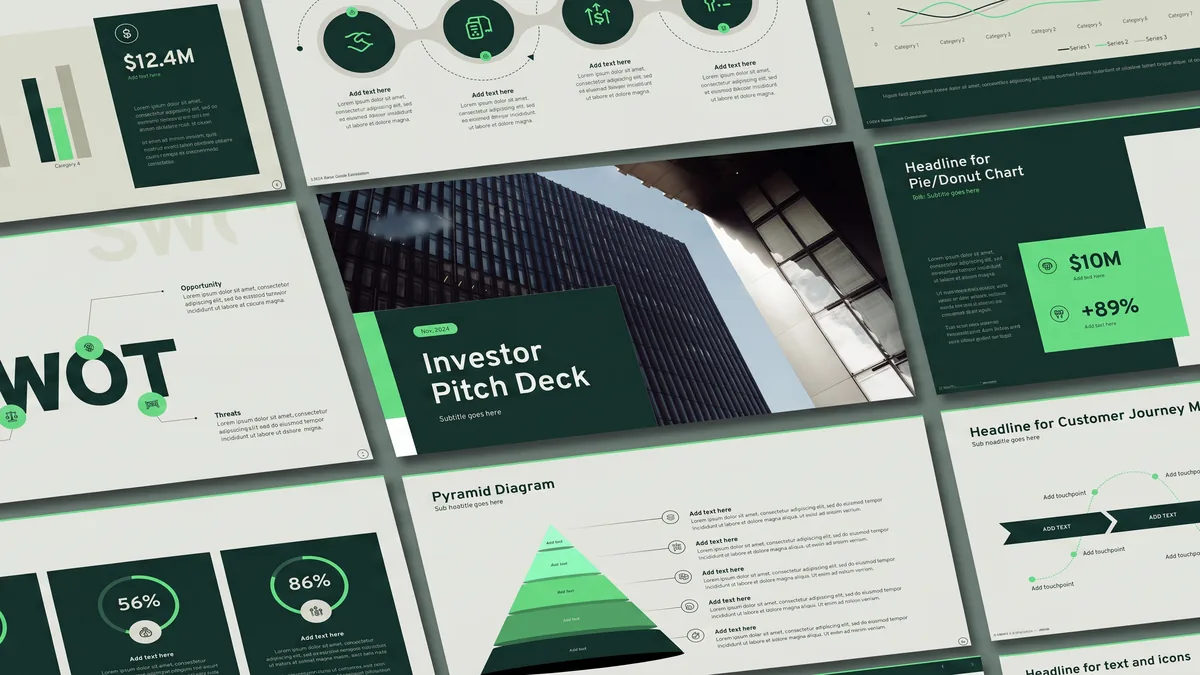
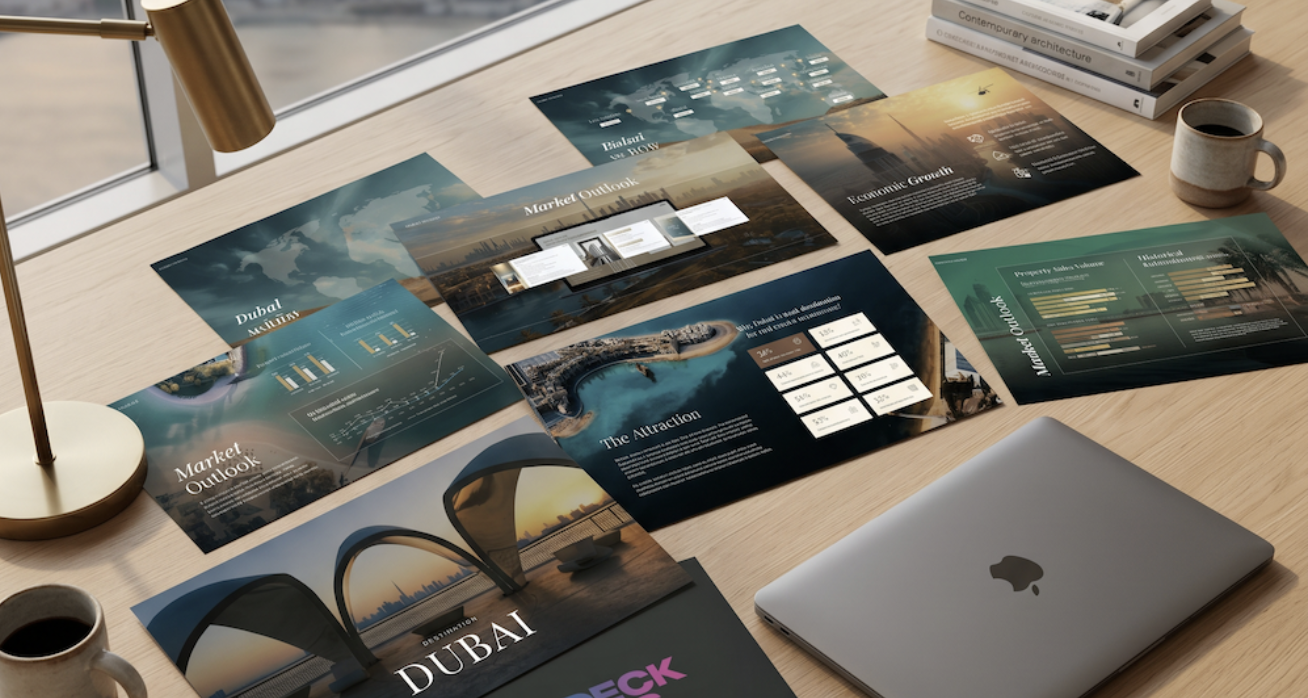
A pitch deck for investors connects the opportunity, the evidence, and the company’s next steps into a coherent investment story. It helps someone unfamiliar with the business understand what matters, evaluate the claims, and identify the questions worth exploring.
At Pitch Deck Studios, we work at that intersection of structure, narrative, and design. Our fundraising work spans different industries, where the evidence changes but the need for clarity remains.
21 companies, $820M+ raised, and different stories behind the numbers
Pitch Deck Studios’ fundraising portfolio includes a reported group of 21 companies that raised more than $820 million with decks created by PDS.
The group spans AI, SaaS, healthcare, deep tech, energy, and other sectors. Names provided in the portfolio materials include Datamasque, Boréas Technologies, StackAI, SunVest Solar, BoxPower, Materialspace, Datarails, Fanvue, and Mezcla.
That breadth matters because different businesses require different explanations.
An AI company needs to make its capabilities and commercial relevance clear. An energy business may need to explain deployment, infrastructure, and project economics. A medical device startup must connect scientific evidence with development milestones and a credible business opportunity.
A familiar slide structure can provide a starting point. The narrative still needs to reflect the company behind it.
The fundraising figures represent capital secured by those businesses. PDS’s contribution is the communication work: helping founders present their companies through investor decks and, where included in the engagement, financial models and strategic presentations.
Two individual cases show how that work connects to distinct fundraising contexts.
Sedivention: organizing a MedTech story before a €2.9M seed round
Sedivention is a German MedTech startup developing a minimally invasive outpatient therapy for obesity. When it approached Pitch Deck Studios in October 2024, its materials included preclinical results, patent information, and a tested prototype.
The challenge was connecting dense technical content with the market and business case.
PDS structured and designed a 20-slide investor deck, moving from the market problem to the technology, supporting evidence, business model, and funding roadmap. The visual system supported medical content through comparison tables, procedural diagrams, and clear layouts for technical proof points.
Delivered in November 2024, the deck supported Sedivention’s ongoing fundraising.
In May 2026, Sedivention closed a €2.9 million seed round. Investor HTGF’s announcement stated that the funding would support further product development, a first-in-human study, and preparation for subsequent clinical and regulatory steps.
The communication lesson is to distinguish what has been demonstrated from what the next round will enable. Scientific detail becomes more useful when its significance and development stage are clear.
Explore the Sedivention case study.
Trustifi: an investor presentation for a cybersecurity SaaS company
Trustifi operates in email security, where a company’s story can quickly become a list of threats, capabilities, and technical terminology.
Pitch Deck Studios worked with Trustifi on its investor pitch deck, whose cover carried the message “Rethinking Email Security.”
That framing gives the presentation a clear subject. The broader task for a cybersecurity funding narrative is to connect the technology with customer needs, differentiation, and the business opportunity.
On June 3, 2025, Trustifi announced a $25 million Series A led by Camber Partners. The company said the capital would support its product roadmap, go-to-market initiatives, and expanded marketing efforts.
The available project materials establish PDS’s involvement in the investor deck. The funding announcement establishes Trustifi’s subsequent financial milestone. Together, they document an engagement with a technology company that went on to secure growth capital.
For founders, the practical lesson is that product capability and investment relevance need to be connected explicitly. A reader should understand both what the technology does and why that capability matters commercially.
What these cases reveal about a pitch deck for investors
Sedivention and Trustifi operate in different markets. Their presentations need different evidence, language, and visual explanations.
Three principles carry across both contexts.
Structure makes the business easier to evaluate
Founders know how the pieces of their business connect. An outside reader needs those connections made visible.
The presentation should establish the customer problem, explain the company’s approach, and show the evidence supporting it. From there, it can clarify the business model and the purpose of the funding round.
In Sedivention’s case, sequencing helped connect technical material with a commercial story. For another company, the strongest starting point might be customer adoption or a demonstrated operational improvement.
The order should serve the argument.
Narrative explains why the evidence matters
A patent, product capability, or growth metric needs context.
What does it establish? Which uncertainty does it reduce? What remains to be proven?
Those questions help turn separate facts into an investment narrative. They also keep the presentation honest: early findings remain early findings, and future milestones remain future milestones.
A useful story gives ambition a clear foundation in the evidence available today.
Design helps people follow complex information
Design determines how easily a reader can compare alternatives, understand a process, or interpret a result.
A diagram can explain a technical mechanism. A comparison table can clarify positioning. A chart can make a trend visible, provided its labels and definitions are clear.
The visual decisions should follow the content. A medical device presentation and a cybersecurity SaaS deck need to communicate different kinds of information, even when both aim to support an investor conversation.
What a fundraising result says about the work
A completed round is a company milestone shaped by many factors: the team, technology, market opportunity, operating progress, investor relationships, and diligence.
The deck contributes by making the business case easier to understand and discuss. It provides a common reference for the opportunity, supporting evidence, and intended use of capital.
That is the role of PDS’s work within these fundraising stories.
The collective portfolio demonstrates breadth. Sedivention provides a documented example of technical and commercial content brought into one presentation. Trustifi adds a cybersecurity SaaS engagement followed by a significant Series A milestone.
For a founder preparing a round, the relevant question is how that experience can help clarify their own business.
Give your next investor conversation a clearer foundation
Before building your next presentation, identify what the audience must understand about your company.
Which evidence deserves attention? Where does the story become difficult to follow? What will the new capital enable?
Those answers guide the narrative and the design.
At Pitch Deck Studios, we help founders turn complex business material into presentations built for high-stakes conversations. Explore our case studies, then book a discovery call through our fundraising page to discuss your next investor pitch.